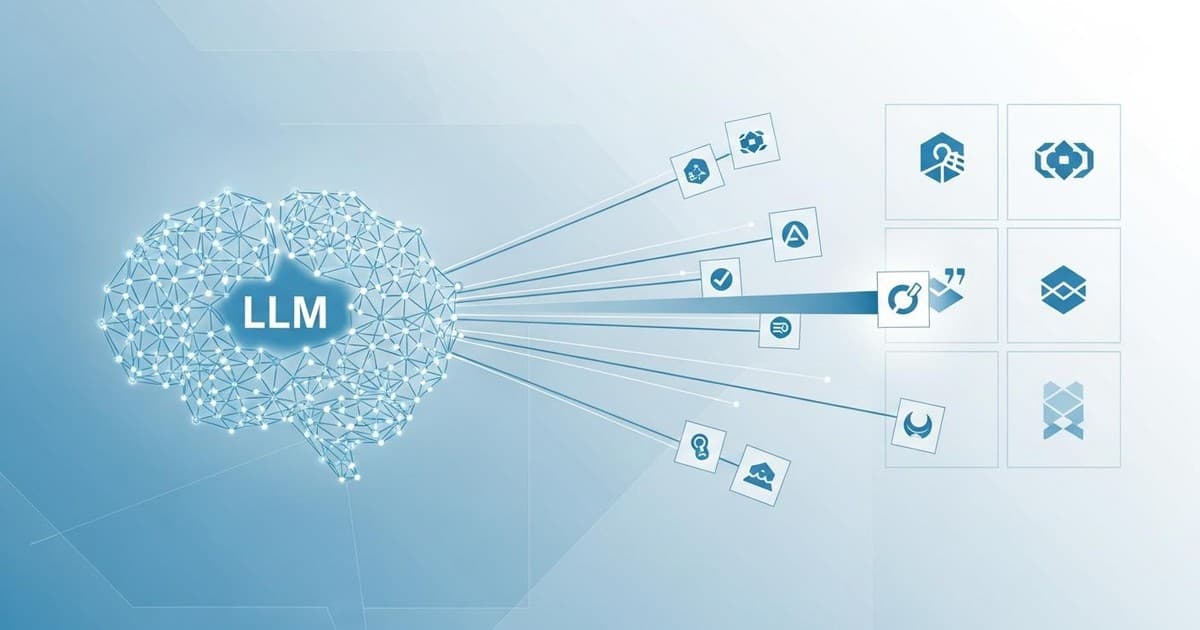
How to get your company into LLM citations

Getting your company cited by large language models like ChatGPT, Claude, and Perplexity requires creating authoritative, well-structured content that answers specific questions, establishing domain credibility through backlinks, and maintaining fresh, timestamped information that AI systems can easily extract and attribute. For digital and marketing agencies managing multiple clients, mastering this emerging channel means positioning your clients—and your agency—as trusted sources before this space becomes saturated.

If you've ever asked ChatGPT about SEO tools and seen Ahrefs pop up, or queried Claude about email marketing and received a Mailchimp recommendation, you've witnessed LLM citations in action. These aren't random selections. They're the result of deliberate content strategies that hit specific marks AI systems prioritize when deciding what to cite.

Understanding LLM Citations and Why They Matter for Agencies

Image representing Understanding LLM Citations and Why They Matter for Agencies

Before diving into tactics, let's clarify what we're discussing. An LLM citation occurs when an AI chatbot attributes information to your brand with a clickable link. This differs from a simple mention, where your brand name appears without attribution. The gold standard is achieving both: your brand name mentioned in the response with a citation link directing users to your content.

For digital and marketing agencies, LLM citations represent a fundamentally new traffic channel. While the volume currently remains modest—often less than 1% of total traffic—the quality is exceptional. Users arriving from AI citations demonstrate conversion rates between 185% and 2300% higher than traditional search traffic. These visitors have already been pre-qualified by the AI's recommendation, arriving with higher intent and trust.

Beyond immediate traffic, citations build cumulative authority. Each time an AI system references your client's brand, it reinforces their position as an industry expert. For agencies managing multiple clients with a CMS, this creates a scalable competitive advantage: establish citation dominance now, before competitors recognize the opportunity.

How LLMs Decide What to Cite

Image representing How LLMs Decide What to Cite

Understanding the technical foundation helps agencies develop effective strategies. LLMs draw from two primary knowledge sources: training data (information the model learned during development) and Retrieval-Augmented Generation or RAG (real-time web searches performed when answering queries).

Training data becomes outdated quickly. When users ask about recent events, current statistics, or time-sensitive information, LLMs trigger web searches to supplement their responses. This is where your citation opportunity exists. The AI performs a search similar to Google, evaluates results based on relevance and authority, extracts information, and attributes sources with citations.

This explains why asking the same question multiple times yields different citations. Each query triggers a fresh search, and ranking algorithms combined with AI selection criteria produce varying results. For agencies, this means consistency across multiple optimization factors matters more than gaming a single algorithm.

What Content Gets Selected for LLM Citations

Image representing What Content Gets Selected for LLM Citations

AI systems prioritize specific content characteristics when selecting citations. Understanding these selection criteria transforms your content strategy from guesswork into systematic optimization.

Freshness and Recency

LLMs exhibit strong recency bias, particularly for queries implying current information. Content published or updated within the past 6-12 months significantly outperforms older material. For agencies, this means establishing content update schedules for client sites. A CMS for digital agencies with built-in workflow management makes regular content refreshes sustainable across multiple accounts.

Domain Authority and Ranking Position

While LLMs don't directly measure domain authority, they cite content that ranks well in traditional search. Strong backlink profiles, topical authority, and technical SEO fundamentals indirectly influence citation likelihood. When evaluating the best cms for marketing agency needs, prioritize platforms that support robust SEO capabilities alongside content management.

Semantic Relevance and Depth

AI systems excel at understanding semantic relationships. Content that comprehensively addresses a topic from multiple angles outperforms thin, keyword-stuffed pages. Your content should answer the primary question, address related subtopics, and provide context that demonstrates genuine expertise.

Structured, Extractable Information

LLMs favor content formatted for easy extraction. Clear headings, bulleted lists, tables, and concise paragraphs signal well-organized information. Schema markup and structured data further enhance extractability, helping AI systems identify key facts, statistics, and attributable claims.

Analyzing Citation-Worthy Content: A Case Study Approach

Image representing Analyzing Citation-Worthy Content: A Case Study Approach

Let's examine what makes content citation-worthy by analyzing common patterns in highly-cited pages. The most successful content shares specific characteristics that agencies can replicate across client sites.

Citation-worthy content typically opens with a direct answer to a common industry question. No fluff, no extensive preamble—just immediate value. This mirrors how AI systems present information: concise, direct, and actionable.

These pages include original data with clear timestamps. Whether it's proprietary research, survey results, or compiled statistics, original data sources attract citations because AI systems prioritize primary sources over aggregators. When you publish original findings, include the publication date prominently and update the timestamp when refreshing data.

Expert author bylines with credentials signal authority. AI systems increasingly evaluate content credibility through author expertise, particularly for YMYL (Your Money, Your Life) topics. For agency clients, this means developing author profiles that showcase relevant credentials and industry experience.

The content addresses multiple related questions within the same piece. Rather than creating separate articles for closely related queries, comprehensive guides that explore a topic from various angles capture more citation opportunities. This approach to entity-based content strategy helps AI systems understand your topical authority.

Eight Actionable Tactics for Earning LLM Citations

Image representing Eight Actionable Tactics for Earning LLM Citations

1. Identify What's Already Getting Cited in Your Niche

Start by researching which content AI systems currently cite for queries relevant to your clients. Open ChatGPT, Claude, or Perplexity and ask questions your target audience would ask. Document which sources receive citations and analyze common patterns. What format do these pages use? What depth of information do they provide? How recent is the content?

For agencies managing multiple clients with a cms, create a citation tracking spreadsheet documenting competitor citations by client, query type, and cited source. This intelligence informs your content strategy and reveals gaps your clients can fill.

2. Find and Fill Citation Gaps

After identifying what's currently cited, look for questions that receive incomplete answers or outdated citations. These gaps represent immediate opportunities. If AI systems cite a 2021 article for a query about current trends, create a comprehensive 2024 guide addressing the same topic with updated information.

Pay particular attention to queries where AI systems provide answers without citations or cite non-authoritative sources. These indicate topics where establishing authority is achievable even for newer brands.

3. Become the Original Source

Original research, proprietary data, and first-hand case studies attract citations because they provide information unavailable elsewhere. For agencies, this might mean conducting client industry surveys, compiling benchmark reports, or publishing detailed case studies with specific results.

When publishing original data, format it for easy extraction. Use tables for statistics, clear headings for key findings, and include methodology explanations that establish credibility. Building citation-worthy content requires thinking like a data source rather than just a content publisher.

4. Optimize for EEAT (Experience, Expertise, Authoritativeness, Trustworthiness)

Google's EEAT guidelines align closely with what LLMs prioritize for citations. Demonstrate experience through specific examples and case studies. Showcase expertise with author credentials and detailed technical knowledge. Build authoritativeness through backlinks and brand mentions. Establish trustworthiness with transparent sourcing and regular updates.

For agencies, implementing EEAT across client sites requires systematic approaches. Client management with a cms becomes significantly easier when your platform supports author management, content versioning, and update workflows that maintain EEAT signals at scale.

5. Keep Content Updated with Visible Timestamps

Implement a content refresh strategy that updates high-value pages quarterly or bi-annually. When updating, modify the publication date or add a "Last Updated" timestamp prominently. This signals freshness to both traditional search engines and LLMs.

Focus refresh efforts on pages targeting queries with recency implications: "best tools for [year]," "current trends in [topic]," or "how to [task] in [year]." For evergreen content, update statistics, add recent examples, and ensure all linked resources remain active.

6. Follow SEO Best Practices as a Foundation

Since LLMs often cite content that ranks well in traditional search, SEO fundamentals remain essential. This includes technical optimization (fast loading, mobile responsiveness, clean code), on-page SEO (keyword optimization, internal linking, meta tags), and off-page SEO (backlink acquisition, brand building).

When addressing problems with kontent ai or evaluating contentful reviews for clients, consider how each platform supports these SEO fundamentals. The best cms for marketing agency work seamlessly integrates SEO capabilities with content management, eliminating the need for extensive workarounds or plugins.

7. Implement Schema Markup and Structured Data

Schema markup helps AI systems understand content structure and extract specific information types. Implement relevant schema types for your content: Article schema for blog posts, FAQPage schema for Q&A content, HowTo schema for instructional content, and Dataset schema for original research.

Structured data doesn't guarantee citations, but it removes extraction barriers. When AI systems can easily identify key facts, statistics, and attributable claims, citation likelihood increases. For agencies, choosing a CMS that simplifies schema implementation across multiple client sites streamlines this optimization.

8. Amplify Content for Backlinks and Authority Signals

Creating citation-worthy content is only half the equation. Amplification builds the authority signals that increase citation probability. Promote new content through email outreach to industry publications, social media distribution to relevant communities, and strategic partnerships with complementary brands.

Focus particularly on earning backlinks from authoritative industry sources. Each quality backlink strengthens domain authority and increases the likelihood that your content appears in the search results LLMs evaluate when selecting citations. Understanding how brands rank in LLM results reveals the cumulative effect of consistent authority building.

Measuring and Tracking LLM Citations

Image representing Measuring and Tracking LLM Citations

Unlike traditional SEO, LLM citation tracking requires different approaches since standard analytics don't always capture AI-driven traffic with clear source attribution.

Manual Testing and Monitoring

Establish a routine of manually testing key queries across multiple AI platforms. Create a tracking document listing priority queries for each client, test them monthly, and document which sources receive citations. This qualitative data reveals trends and opportunities that automated tools might miss.

Vary your testing approach by using different phrasings of the same question, testing from different geographic locations if relevant, and comparing results across ChatGPT, Claude, Perplexity, and other emerging AI platforms. Citation patterns vary significantly between platforms.

Analytics Configuration

Configure Google Analytics or your preferred analytics platform to track referral traffic from AI sources. Create custom segments for traffic from chatgpt.com, perplexity.ai, claude.ai, and other AI platforms. Monitor not just volume but engagement metrics: time on site, pages per session, and conversion rates.

The data typically confirms that AI-driven traffic, while modest in volume, demonstrates exceptional quality. Users arriving from citations have already received a recommendation, arriving with higher trust and intent than cold traffic from traditional search.

Paid Monitoring Tools

Several emerging tools specialize in LLM citation tracking. These platforms automate query testing, track citation frequency, and monitor brand mentions across AI systems. While adding cost, they provide scalable monitoring for agencies managing multiple clients, revealing citation opportunities and competitive intelligence that manual testing cannot match.

How Decipher's Benefits for Digital Agencies as a CMS Support Citation Strategies

Image representing How Decipher's Benefits for Digital Agencies as a CMS Support Citation Strategies

Implementing citation optimization across multiple client accounts requires systematic workflows that most traditional content management systems don't support efficiently. This is where specialized solutions designed for agency needs become essential.

Decipher's excellent AI workflows streamline the content creation and optimization process that citation strategies demand. When you're managing content updates across dozens of client sites, AI-assisted writing, automated schema markup suggestions, and intelligent content gap analysis transform citation optimization from overwhelming to manageable.

The platform's multi-client management capabilities allow agencies to implement citation strategies systematically. Create content templates optimized for LLM citations, deploy them across relevant client accounts, and track performance from a unified dashboard. This approach scales citation optimization in ways that managing individual client sites cannot match.

For agencies based in Kuala Lumpur or serving international clients, Decipher's cloud-based architecture ensures consistent performance regardless of geographic distribution. Content updates, schema implementations, and authority signals that influence citations can be managed centrally while maintaining client-specific customization.

Common Challenges and How to Overcome Them

Image representing Common Challenges and How to Overcome Them

Agencies implementing citation strategies encounter predictable challenges. Understanding these obstacles and their solutions prevents wasted effort and accelerates results.

Challenge: Inconsistent Citation Results

The same query often produces different citations across testing sessions. This inconsistency frustrates agencies seeking predictable results. The solution lies in understanding that citation optimization is probabilistic, not deterministic. Focus on increasing citation probability through multiple optimization factors rather than guaranteeing specific outcomes.

Challenge: Limited Resources for Original Research

Creating original data sources—the most citation-worthy content type—requires resources many agencies struggle to allocate. Overcome this by starting small: conduct quarterly client surveys with 50-100 respondents, compile industry benchmark reports from publicly available data, or publish detailed case studies with specific metrics. Even modest original research outperforms purely aggregated content.

Challenge: Measuring ROI

Citation traffic remains modest, making ROI justification difficult. Reframe the conversation around long-term positioning rather than immediate returns. Agencies that establish citation dominance now will maintain advantages as this channel grows. Additionally, emphasize traffic quality over quantity—the exceptional conversion rates of citation-driven visitors often justify the investment even at low volumes.

The Future of LLM Citations and Agency Positioning

Image representing The Future of LLM Citations and Agency Positioning

The LLM citation landscape is evolving rapidly. AI systems are becoming more sophisticated in evaluating content quality, user behavior signals are increasingly influencing citation algorithms, and brand authority is playing a larger role in selection decisions.

For forward-thinking agencies, this evolution presents opportunity. The agencies that master citation optimization now will establish expertise that becomes increasingly valuable as clients recognize this channel's importance. Position your agency as the expert in AI visibility, not just traditional SEO.

This expertise also differentiates your agency in competitive pitches. When prospects are evaluating options, demonstrating concrete strategies for emerging channels like LLM citations signals innovation and forward-thinking that generic SEO promises cannot match.

Getting Started: Your 30-Day Citation Strategy

Image representing Getting Started: Your 30-Day Citation Strategy

Implementing citation optimization doesn't require overhauling your entire content strategy immediately. Start with a focused 30-day sprint that establishes foundations and generates early wins.

Week one: Conduct citation research for your top three clients. Test 10-15 queries per client across ChatGPT, Claude, and Perplexity. Document current citations and identify gaps where your clients could provide superior information.

Week two: Create or update three pieces of content per client optimized for identified citation opportunities. Focus on adding original data, implementing schema markup, and ensuring content directly answers common questions with extractable information.

Week three: Amplify the optimized content through outreach, social promotion, and strategic backlink acquisition. Build the authority signals that increase citation probability.

Week four: Re-test your priority queries and document any citation wins. Even if your content isn't cited yet, monitor ranking improvements in traditional search—a leading indicator of eventual citation success. Establish ongoing monitoring processes and refine your approach based on results.

Conclusion: Claiming Your Authority Before the Rush

Image representing Conclusion: Claiming Your Authority Before the Rush

LLM citations represent a fundamentally new channel for building brand authority and driving high-quality traffic. While current volumes remain modest, the exceptional quality of citation-driven visitors and the long-term positioning advantages make this channel essential for forward-thinking agencies.

The opportunity exists precisely because most brands haven't recognized the importance yet. Digital and marketing agencies that establish citation dominance now will maintain advantages as this space becomes increasingly competitive. Your clients will be cited as authorities while competitors are still figuring out what LLM citations are.

For agencies managing multiple clients, systematic implementation requires the right tools. A content management system designed specifically for agency workflows—with AI assistance, multi-client management, and optimization capabilities—transforms citation strategies from theoretical to practical.

Start with the tactics outlined here: identify what's currently cited, fill gaps with original research, optimize for EEAT, and amplify strategically. Track results, refine your approach, and scale what works across your client portfolio. The agencies that act now will define best practices that others follow later.

Ready to implement citation strategies across your client portfolio with workflows designed specifically for agency needs? Discover how Decipher's AI-powered content management system helps digital agencies in Kuala Lumpur and beyond manage multiple clients efficiently while optimizing for emerging channels like LLM citations. Schedule a demo to see how the right CMS transforms citation optimization from overwhelming to systematic.

Related Articles