
Google's Try-on Feature for AI Shopping
Google's Try-on Feature for AI Shopping uses generative artificial intelligence to let shoppers visualize how clothing items will look either on diverse models or on their own uploaded photos, addressing a critical pain point where 42% of online shoppers don't feel represented by traditional model images and 59% feel dissatisfied because items look different than expected online.
For digital and marketing agencies managing e-commerce clients, understanding this technology isn't just about keeping up with trends—it's about recognizing how AI is fundamentally transforming the customer journey and what that means for content strategy, product presentation, and conversion optimization across the platforms you manage.
Why Google's Virtual Try-On Matters for Agency Clients

The gap between online browsing and in-store shopping has always been tactile. Walk into a physical store, and you immediately know if something fits your style, your body, your vibe. Online shopping has historically lacked that instant validation, leading to higher return rates and abandoned carts. Google's AI-powered Virtual Try-On feature bridges this gap by bringing the fitting room experience directly into search results.
For agencies managing multiple e-commerce accounts, this represents a significant shift in how product content performs. The feature doesn't just enhance user experience—it fundamentally changes search behavior and purchase confidence. When shoppers can see themselves in the product before clicking through to a retailer's site, they arrive with higher intent and clearer expectations.
The Two Core Components of Google AI Shopping

Google's approach to virtual try-on splits into two distinct experiences, each serving different user needs and stages of the shopping journey.
Virtual Try-On for Apparel
The first component uses generative AI to display clothing on a diverse library of real models. This isn't about synthetic avatars or generic mannequins—Google has built a model library spanning sizes XXS-4XL, various skin tones measured using the Monk Skin Tone Scale, different body shapes, ethnicities, and hair types. The AI model takes a single clothing image and accurately reflects how fabric drapes, folds, clings, stretches, wrinkles, and creates shadows across different body types.
Personalized Try-On
The second component, currently available only in the US for users 18 and older, allows shoppers to upload their own photos. This personal visualization works across billions of apparel items from countless retailers, providing what Google calls a "vibe check" for personal style exploration. It's the closest digital approximation to holding something up in front of a mirror.
Technical Capabilities That Power the Experience

Understanding the technical foundation helps agencies advise clients on content optimization. The generative AI model behind Google Shopping doesn't just overlay images—it simulates fabric physics. When showing how a silk blouse drapes versus a structured cotton shirt, the AI accounts for material properties, body contours, and realistic movement.
For the model try-on experience, the system analyzes garment structure and applies it to diverse body types with remarkable accuracy. The technology considers how different fabrics behave: the way denim stretches across thighs differs from how chiffon flows, and the AI reflects these nuances.
The personal try-on feature requires machine learning-powered visual matching algorithms that map clothing items onto user-uploaded photos. This integration with Google's Shopping Graph—the world's most comprehensive product dataset—enables the feature to scale across retailers without requiring individual merchant integrations for the try-on functionality itself.
Just as agencies need robust systems for managing client workflows, e-commerce platforms require sophisticated infrastructure. When you're juggling content strategies across multiple retail clients, having a centralized approach to product data management becomes essential, much like how the best cms for marketing agency operations streamlines multi-client oversight.
How to Access and Use the Feature

For agencies testing this feature or advising clients, here's the current access framework. The virtual try-on is available on Google Shopping, Google Search, and Google Images, but exclusively for US users currently. Access requires users to be logged in, 18 or older, with Web & App Activity and Search Personalization enabled. The feature works on both mobile and desktop devices.
Product coverage started with women's tops from brands like Anthropologie, Everlane, H&M, and LOFT, and is expanding to men's tops and additional categories. Currently, the feature supports tops, bottoms, and dresses, but excludes lingerie, bathing suits, and accessories. Notably, it's not available for Shopping Ads or "Sponsored" products—an important distinction for paid search strategies.
Step-by-Step Usage
The user journey is remarkably straightforward. Shoppers search for any top, bottom, or dress on Google, then click on a product displaying the "Try On" badge. From there, they choose between selecting from Google's diverse model library or uploading their own photo by clicking the "Try it on" button. After viewing generated images, users can save or share their looks, and refine results using machine learning-powered filters for color, style, pattern, and price.
This refinement capability extends beyond single retailers, allowing users to discover products across stores throughout the web—a significant advantage for product discovery that agencies should factor into competitive analysis and content positioning strategies.
Photo Requirements for Optimal Results

When advising clients or testing the personal try-on feature, photo quality significantly impacts results. Google specifies clear criteria for best results: full-body images from head to toe, no other people in the photo, standing tall with hands outside pockets (no sitting), good lighting with clutter-free backgrounds, fitted clothing rather than baggy garments, and close enough to the camera to capture detail.
Photos must be of yourself or someone with explicit permission, and photos of children are prohibited. These requirements balance functionality with safety—a consideration that parallels how agencies must balance creative ambition with brand safety when managing client content across platforms.
Privacy Protections and Safety Policies

For agencies managing client data and customer trust, Google's privacy framework around this feature offers a useful benchmark. The system collects no biometric data and stores none. Uploaded photos are never used for training purposes, aren't shared with other Google products, services, or third parties, and data is disconnected from user accounts during quality reviews.
Automated tools remove identifying information, and users maintain complete control—they can save, share, or delete photos anytime. The infrastructure benefits from Google's broader security protections, addressing concerns that naturally arise when personal images enter any AI system.
The prohibited content policy excludes adult-oriented content, CSAM, non-consensual sexual content, and anything inappropriate, dangerous, derogatory, or shocking. These guidelines fall under Google's Generative AI Prohibited Use policy, establishing clear boundaries for acceptable use.
Understanding Limitations and Setting Expectations
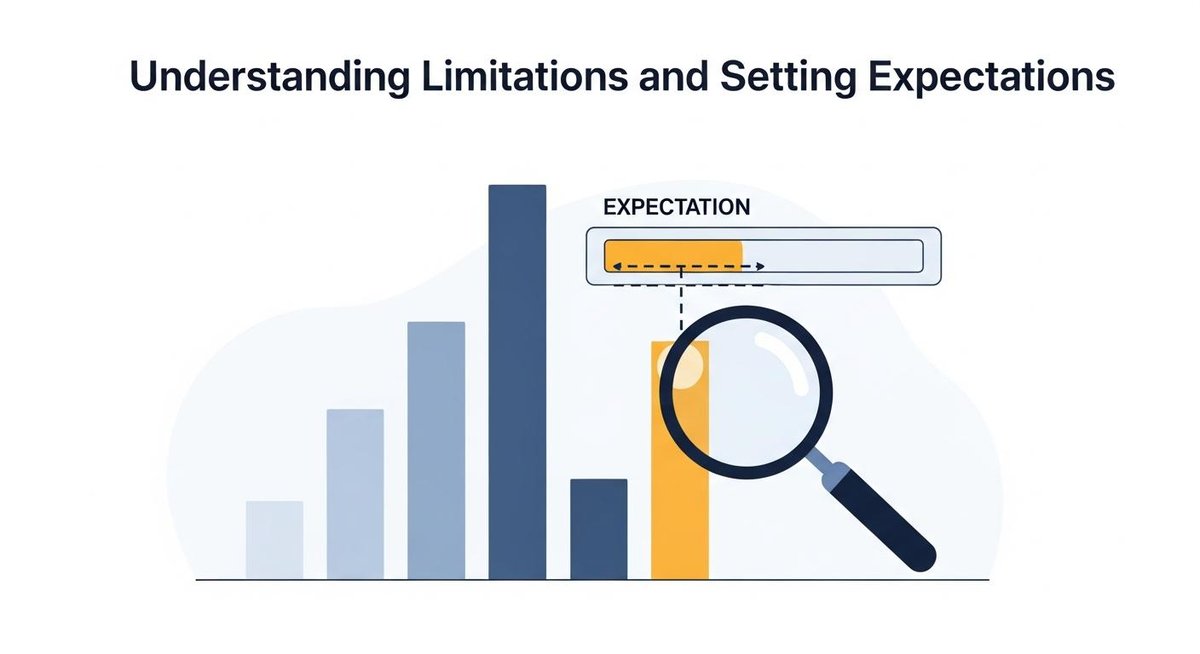
Transparency about limitations matters for both user trust and agency credibility. Generated images may include mistakes in body shapes, facial features, or clothing details. This technology provides visual representation, not a guarantee of actual fit. Shoppers should always refer to size charts, reviews, and detailed product descriptions.
The approximations may not reflect bodies or features with perfect accuracy—it's an AI-powered visualization tool, not a measurement system. User feedback becomes essential for improvement, and Google explicitly positions this as an evolving technology. For agencies, this means managing client expectations about what AI can deliver versus what traditional product photography and detailed specifications still accomplish.
Managing client expectations across multiple accounts requires systems that scale without sacrificing quality. When problems with kontent ai or other platforms emerge, agencies need alternatives that handle complexity gracefully—similar to how Google's Shopping Graph infrastructure enables try-on features to scale across billions of products while maintaining performance.
Implications for E-Commerce SEO Strategy

The intersection of Google AI Shopping and E-Commerce SEO creates new considerations for how agencies optimize product content. When Google can visualize products on diverse models or personal photos, traditional product imagery optimization expands. High-quality source images become even more critical because they feed the generative AI system.
Structured data, product feeds, and merchant center optimization now impact not just traditional search results but also whether products become eligible for try-on features. The "Try On" badge becomes a visual differentiator in search results, potentially affecting click-through rates independent of ranking position.
For agencies handling contentful reviews or evaluating cms for digital agencies, the parallel is clear: infrastructure decisions impact feature availability. Just as merchant platforms must meet Google's technical requirements for try-on eligibility, content management systems must support the workflows agencies need for managing multiple clients with a cms efficiently.
Scalability and Future Vision

Google's roadmap suggests this is just the beginning. The technology can scale to more brands and items over time, with men's tops launching after the initial women's apparel focus. The refinement features that currently work across multiple retailers will continue expanding, and continuous AI improvements promise better accuracy for everyday shopping activities.
For agencies, this signals a broader trend: AI features will increasingly mediate the customer journey before users even reach client websites. Understanding how these intermediary experiences work—and how to optimize for them—becomes as important as traditional on-site conversion optimization.
The Shopping Graph integration demonstrates how comprehensive product datasets enable innovative features. Similarly, when agencies evaluate client management with a cms, the depth and structure of content repositories determine what advanced features become possible. Decipher's benefits for digital agencies as a cms include excellent AI workflows that parallel this principle—robust infrastructure enables sophisticated automation.
User Control and Data Management

Google provides granular control over uploaded photos and generated images. Photos save for convenience, enabling one-time upload and repeated use, but users can upload new photos or delete existing ones anytime through the camera icon. Generated images appear in a "Recently tried" tray and can be individually deleted or managed via Google Account saved items. Users can also provide feedback on generated images, contributing to system improvement.
This level of user control reflects best practices that agencies should mirror in client work: transparency about data use, easy access to deletion, and clear value exchange for information provided.
What This Means for Marketing Agencies

For digital and marketing agencies in the SaaS space, Google's Virtual Try-On feature represents more than a novel shopping tool—it's a case study in how generative AI reshapes user expectations and platform capabilities. Clients will increasingly ask how AI can enhance their customer experience, and agencies need frameworks for evaluating, implementing, and optimizing these technologies.
The feature also highlights the importance of technical infrastructure. Just as Google's Shopping Graph enables try-on functionality across billions of products, agencies need content management systems that support AI workflows and multi-client management without creating operational bottlenecks. Managing multiple clients with a cms that lacks modern capabilities creates the same friction that online shopping without try-on features once did—solvable problems that newer technology addresses more elegantly.
Whether you're based in Kuala Lumpur or managing global e-commerce accounts, understanding how platforms like Google integrate AI into core user experiences helps you advise clients more strategically. The try-on feature won't replace traditional product content, but it changes how that content gets discovered, evaluated, and ultimately converted into purchases. Agencies that recognize these shifts early position themselves as strategic partners rather than tactical executors—the difference between managing campaigns and shaping digital strategy.


