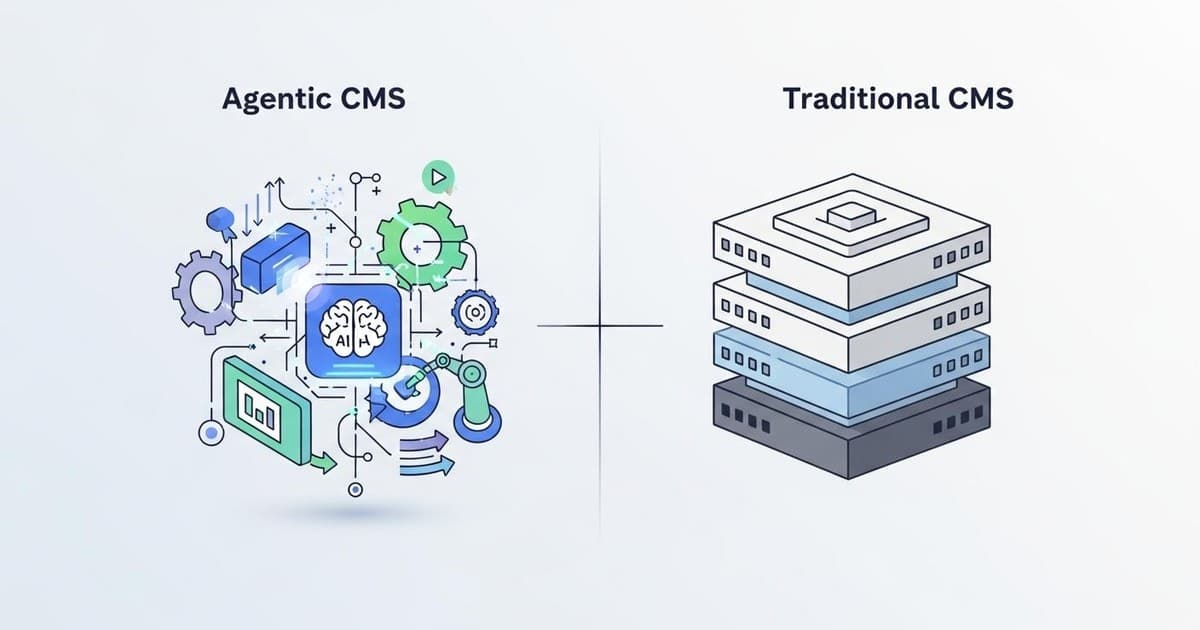
Agentic CMS vs Traditional CMS: A Comparison for Enterprises
The fundamental difference between agentic CMS and traditional CMS lies in their approach to content management: agentic CMS platforms use AI agents to autonomously handle content workflows, while traditional systems rely on manual processes with basic automation features. For enterprises choosing between these approaches, the decision impacts everything from content velocity to resource allocation and long-term scalability.
We've seen countless organizations struggle with this choice, often defaulting to familiar traditional systems only to hit scaling walls later. Let's break down the real-world implications of each approach so you can make an informed decision for your enterprise.
The Traditional CMS Champion: Proven but Predictable

Traditional content management systems have earned their stripes through decades of enterprise deployment. These platforms built their reputation on reliability, extensive customization options, and comprehensive feature sets that cover every conceivable content scenario.
Traditional CMS Advantages
Mature Ecosystem: Traditional CMS platforms offer extensive plugin libraries, third-party integrations, and established developer communities. Your team can find solutions for virtually any content challenge, from complex content models to specialized SEO requirements.
Predictable Costs: Licensing, hosting, and maintenance costs are well-established. Enterprise budget planning becomes straightforward when you know exactly what resources you'll need for content operations.
Full Control: Every content workflow, approval process, and publishing rule can be manually configured. This granular control appeals to organizations with specific compliance requirements or unique content governance needs.
Traditional CMS Limitations
Resource Intensive: Manual content processes require significant human resources. Content teams spend more time on administrative tasks than strategic content creation, limiting overall content velocity.
Scaling Challenges: As content volume grows, traditional systems require proportional increases in human resources. Determining when to upgrade your CMS becomes critical as these scaling limitations become apparent.
Limited Intelligence: While some traditional platforms add AI features, these are typically surface-level additions rather than fundamental workflow improvements. Content ideas generation and structured content optimization remain largely manual processes.
The Agentic CMS Revolution: Intelligence-First Approach
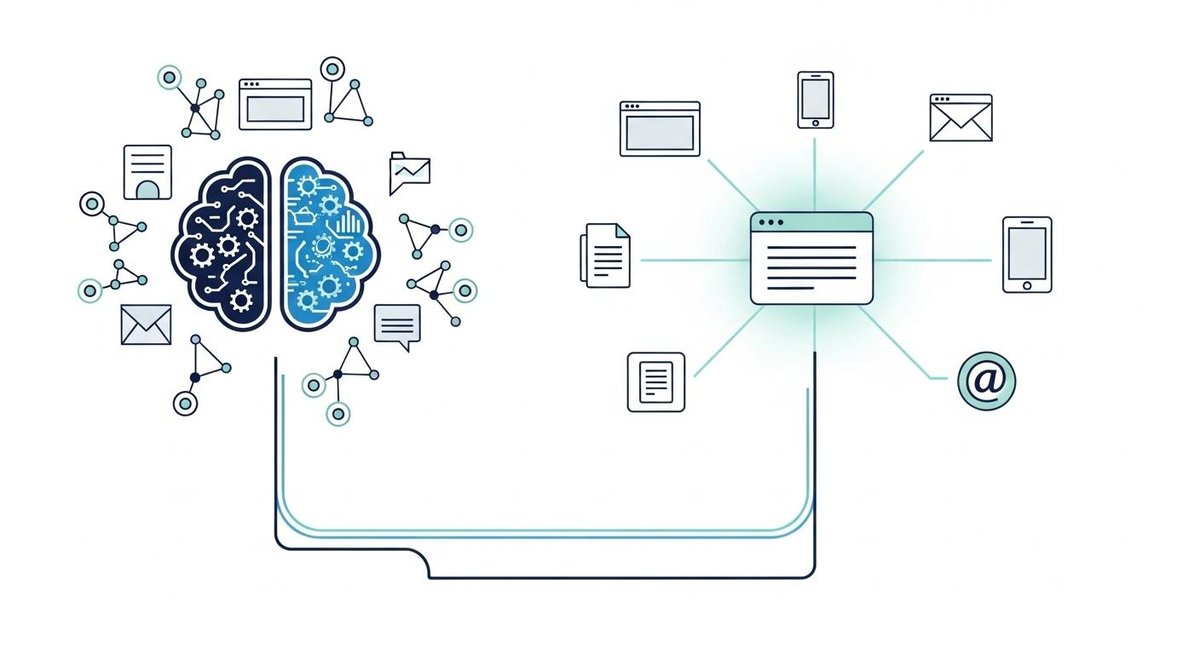
Agentic CMS represents a paradigm shift where AI agents handle routine content operations, freeing human teams to focus on strategy and creativity. These systems don't just manage content—they actively participate in content creation and optimization.
Agentic CMS Advantages
Autonomous Operations: AI agents handle content scheduling, optimization, and distribution without human intervention. This automation extends beyond simple publishing to include content analysis, performance optimization, and even content ideas generation based on audience behavior patterns.
Intelligent Content Models: Understanding how agentic CMS transforms business operations reveals how AI-driven content models adapt to user behavior, automatically optimizing for engagement and conversion.
Scalable by Design: Content production scales with AI capability rather than human resources. Teams can handle exponentially more content without proportional staff increases, making this approach particularly valuable for rapidly growing enterprises.
Built-in SEO Intelligence: Agentic systems continuously optimize content for search performance, automatically implementing SEO best practices and adapting to algorithm changes without manual intervention.
Agentic CMS Considerations
Learning Curve: Teams accustomed to manual control may need time to trust AI-driven processes. The shift from hands-on management to strategic oversight requires cultural adaptation.
Customization Complexity: While agentic systems offer powerful automation, customizing AI behavior for specific enterprise needs may require different skills than traditional CMS customization.
Dependency on AI Performance: System effectiveness relies heavily on AI capability. Organizations must evaluate their comfort level with AI-driven decision-making in content operations.
Enterprise Decision Framework: Matching System to Strategy
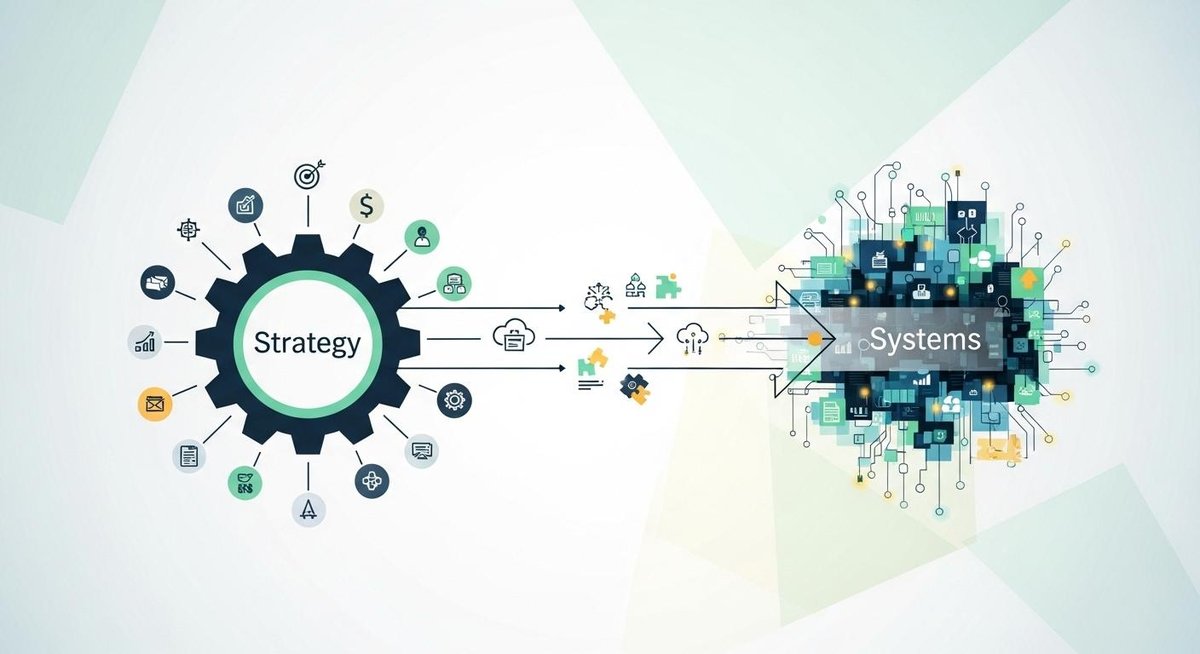
The choice between agentic and traditional CMS shouldn't be based on technology preferences alone. Your decision should align with broader enterprise content strategy and organizational capabilities.
Choose Traditional CMS When:
Your organization prioritizes maximum control over every content decision, has established content workflows that work well at current scale, or operates in highly regulated industries where every content change requires human oversight and approval.
Traditional systems excel when content volume is manageable with current resources and your team prefers hands-on management of all content operations.
Choose Agentic CMS When:
Content velocity is a competitive advantage, your organization needs to scale content production without proportional resource increases, or you're comfortable with AI-driven optimization and decision-making.
Scaling content production effectively becomes crucial for organizations experiencing rapid growth or entering new markets where content volume directly impacts success.
Agentic systems particularly benefit organizations focused on writing for skimmers and mobile-first audiences, where AI can optimize content structure and presentation for maximum engagement.
The Hybrid Reality: Best of Both Worlds

Many enterprises don't need to choose exclusively between approaches. Modern content strategies often benefit from hybrid implementations where agentic CMS handles high-volume, performance-driven content while traditional systems manage mission-critical or highly regulated content.
This approach allows organizations to leverage AI efficiency for scalable content operations while maintaining human oversight for sensitive or strategic content. The key lies in clearly defining which content types benefit most from each approach.
Making Your Enterprise Decision

The agentic CMS versus traditional CMS decision ultimately depends on your organization's content ambitions and operational philosophy. Traditional systems offer proven reliability and complete control, while agentic platforms provide intelligent automation and scalable content operations.
Consider your current content challenges, growth projections, and team capabilities. If manual processes are limiting your content potential, agentic CMS offers a path to intelligent scaling. If control and predictability are paramount, traditional systems provide the foundation you need.
The content management landscape is evolving rapidly, and the organizations that thrive will be those that choose systems aligned with their strategic goals rather than their comfort zones. Whether you choose traditional reliability or agentic intelligence, ensure your CMS supports your content ambitions rather than limiting them.


